What is Social Commerce and Why It’s So Popular in Thailand

socialcomAfter working in the digital space for the better part of the last decade, I have noticed that while the internet creates a neutral playing field for almost anyone and everyone to do business locally and internationally, the act of shopping (online and offline) is still very culturally influenced and it affects the kinds of digital / online business models succeeding in different parts of the world.

Benefits offered by a business have different perceived values in different parts of the world

For example, in the West with the dotcom boom of the mid to late 90s, e-commerce came into existence with early players like Amazon and eBay, launching as an online bookstore and an online auction site, respectively. Over the last two decades the convenience, speed, low prices and comparison shopping e-commerce sites offer are benefits that consumers increasingly value because it can save time and money and as a result shopping online is now a part of everyday life.

When I was living in Boston as a student online shopping was a huge life and time saver; I loved it (especially in the winter) because I could visit my local grocer’s website to order my weekly groceries to be delivered to my doorstep in 24 hours or that my last minute “I need flip flops for my holiday” request was instantly satisfied by an online Black Friday shopping spree.

Cultural values cannot be forgotten when it comes to understanding consumer behavior

However, growing up in Thailand was a different story: I had to leave home to get my errands done whether it’s supermarketing or banking because doing things online wasn’t even a realistic option until a few years ago. When I moved back to Bangkok in 2011 e-commerce and online banking/payments started to gain traction. But it’s interesting to see that even though e-commerce has spread like wildfire through Asia, especially in markets like India, China and Singapore, this not the case with Thailand. Shopping in-person is still a very normal activity — I daresay it’s preferred to online shopping and I strongly believe it’s due to cultural influence.

In Thailand the bazaar and bargaining concept is still alive and kicking, whether it’s inside a mall or on the street, locals enjoy shopping as an activity because they like to touch and try products and haggle for the best prices with vendors. Shopping is not about a quick, efficient transaction; it’s about building the relationship and trust: customers like to know they’re getting the best deal and vendors enjoy selling and interacting with customers. Not to mention that there is still a lack of trust in credit cards and online payments so people still prefer to make payments via cash or bank transfers.

Social commerce boom in Thailand as a result of cultural influences

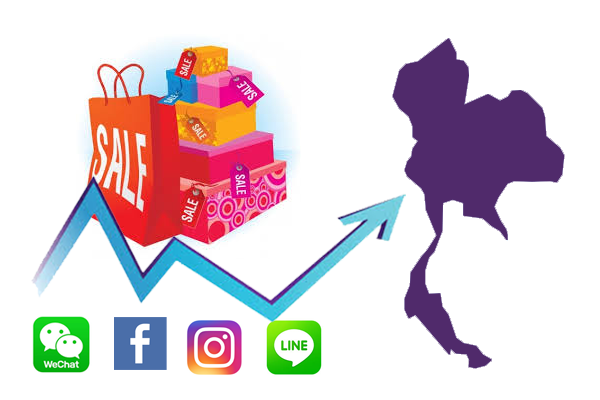
To put it very simply social commerce is completing business transactions and buying goods over social media or social networks. The quickest and easiest example of this is the rapid rise of Facebook, Instagram and Line as marketplaces for products. The social commerce boom in Thailand happened as a result of several cultural and behavioral factors:

  • Instagram and Line mimic the popular bazaar concept because all the products are laid out in photo galleries for the consumer to peruse and choose from
  • The personal interaction aspect of the buying and selling experience is also present with customers and vendors having to chat before a purchase is final
  • Credit card payments on social apps like Line and Instagram have yet to be implemented properly so the only option to pay for goods is either bank transfer or cash payment, which are the preferred payment options in the offline marketplace anyways

All said and done, social commerce offers the benefits most valued by both consumers and vendors in Thailand and that’s why it is growing at such a rapid pace. This is a contrast to the West where social media is still more commonly used for branding and awareness; social commerce is still up-and-coming.

Transactions start on one app and end on another — and that’s totally normal 

Recently I wanted to order custom cupcakes for a private party so here’s what I did: I got in touch with a local pastry chef who I follow on Instagram after seeing amazing photos of her work and then we exchanged numbers so I could contact her on Line chat app to give her the full order details, delivery date and complete payment (via bank transfer and sending her the transfer slip as an image!). We exchanged many messages over a few days about the details of the cupcakes, when and how to deliver them, and price negotiations. While this shopping experience was nowhere near quick and convenient, it was well worth spending the extra days because I felt so well taken care of and satisfied that the vendor understood what I wanted when I made the final payment.

What are your thoughts on social commerce? Are you a fan or a foe? What is the e-commerce vs social commerce situation in your country? Share your thoughts or questions in the comments below. I would love to hear from you!

Video

New Kids Smartwatch with Pre-set Reminders for Bathtime, Meals and More

Source: http://www.octopus.watch/joy/

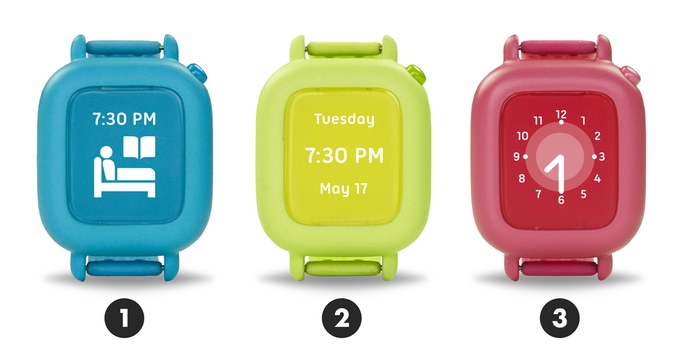
Octopus by Joy watch. Source: www.octopus.watch/joy/

Digital technology is disrupting almost every aspect of our lives — fitness, health, travel — and it’s about to disrupt parenting! I think the Octopus by Joy watch is a powerful concept with great revenue-potential. It’s an icon-based smartwatch for kids aged 3 – 8 years with multiple functions:

  • Tells the time
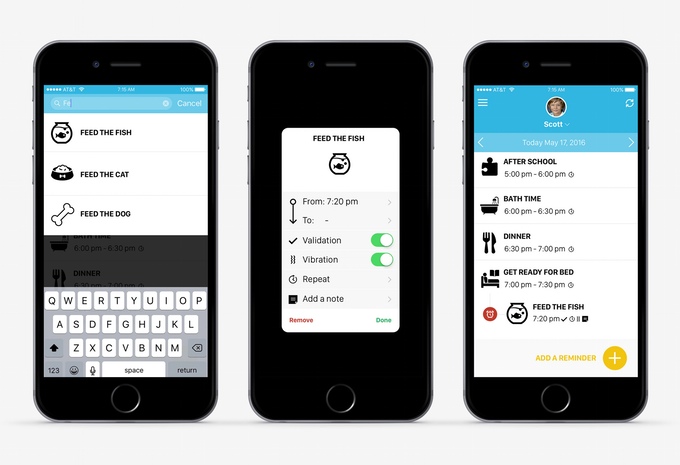
  • Schedules daily routine with pre-set visual reminders (which parents can set by syncing up smartphones with the watch) to pop-up throughout the day reminding kids to take bath, eat, nap, play etc
  • Serves as an assistant to parents
  • Comes with an optional virtual rewards system

The product is borne from co-founder Sam Hickmann’s personal parenting experience and he shows a clear need for the Octopus in the video at the end of the Kickstarter page. I like the product concept a lot because it leverages digital technology in a smart, helpful and fun way to teach children good habits, instill a sense of independence and help parents be more efficient.

Octopus is set to launch in March 2017. Watch the video, see the photos and and be sure to visit the Kickstarter page to get more information.

Octopus by JOY from JOY on Vimeo.

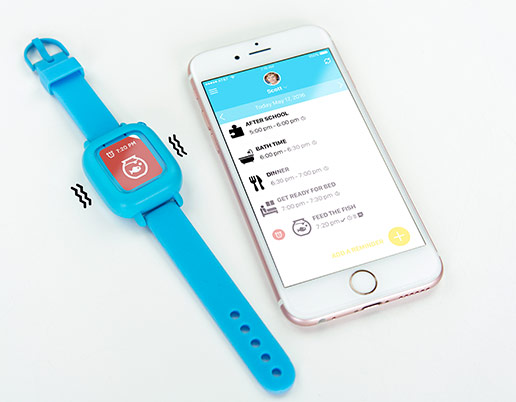
Octopus watch works with iOS & Andriroid phones (Source: http://www.octopus.watch/joy/)

Octopus watch works with iOS & Android phones (Source: www.octopus.watch/joy/)

The charging station is adorable! (Source: http://www.octopus.watch/joy/)

The charging station has a magnetic connecter and it’s so adorable! (Source: www.octopus.watch/joy/)

Available in bright colours (Source: www.kickstarter.com/projects/octopusbyjoy/)

Available in bright colours (Source: www.kickstarter.com/projects/octopusbyjoy/)

Parents can set reminders and alarms to sync with the watch (Source: www.kickstarter.com/projects/octopusbyjoy/)

Parents can set reminders and alarms to sync with the watch (Source: www.kickstarter.com/projects/octopusbyjoy/)

Parents get notification when a task is completed. (Source: www.kickstarter.com/projects/octopusbyjoy/)

Parents get notifications when a task is completed. (Source: www.kickstarter.com/projects/octopusbyjoy/)

What do you think about the Octopus watch? Will you back the Kickstarter campaign? I’m very interested to know your thoughts in the comments below.

The 5Cs Of Using Someone Else’s Images In Your Own Digital Media

womanlaptopI jumped into blogging. Now as I’m swimming through our world of digital media, I’m discovering new pools of learning opportunities. Today I wanted to offer more clarity and insight on how to how to correctly use images and videos that belong to someone else for your own commercial and/or noncommercial use in digital media.


Commercial or noncommercial use: It’s very important to read the terms of usage for any image used that is not your own because the original owner of the image can restrict the use for solely personal or commercial purposes and may require attribution or credit. Usually commercial use covers any use of the image with the intention to gain money such as using images in ads, company websites, product endorsements or videos. Noncommercial use may include use of images in presentations or personal blogs.

Copyright: Always assume images you do not own are copyrighted. Even if you don’t see the copyright (c) icon, just assume that using the image or changing and then using it can get you into trouble. Avoid getting into trouble by using images that are licensed for reuse with or without attribution depending on the terms of usage. Attribution is giving proper credit to the original owner of the media in a format similar to this: Title of work, author, license and linking back to the source i.e. website like Flickr, owner’s website. Here are some sources:  

Public domain images: These are sites that collect images for others to use for free and often without attribution. Always double check.
Sources: Public Domain Archive, New Old Stock

Images from royalty-free websites: This does not always mean the image is free to use. Companies such as Shutterstock have images available with the purpose for anyone to reuse them but often for a minimal license fee depending on the terms of usage. Other websites such as Pixabay offer images for reuse for free.
Sources: Pixabay, Getty Images, Shutterstock, stock.xchng

Images under the Creative Common License: Independent photographers, video and music producers often offer their own content such as photos, videos or music for a fee for commercial or noncommercial use (again, always check!). A search with the keywords “creative commons license + [object]” such will help you find what you’re looking for in Google or try the sources below.
Sources: Photo Pin, WikiMedia Commons, Skitterphoto, Stocksnap.io

Steal1Consent: Depending on the situation always be sure to get written consent to use an image which you do not own and/or features other people in it. If you are using an image of a friend from a social media profile for a personal blog then a written email may suffice. But if you are doing it in a professional or revenue-gaining capacity such as a product photoshoot then you need to get a model/talent release form signed by the person who is in the photo.

Catchability: I made this word up to stress how easy it is to get caught. Don’t assume you can hide online because you can’t. Image search by search engines is much more sophisticated today because even if the file name or image is altered, it can still show up in search results. And my story above is case-in-point on how easy it is to trace someone’s digital footprints on social media.

Create or use your own images: Smartphone camera + filters + no copyright issues, enough said!
iphonepic

The message is clear and simple: Be mindful when using images or media that belong to someone else because aside from the legality issues, there are feelings to seriously consider too.

P.S.: All the images used in this blog post are from Pixabay.com and I didn’t have to give attribution because before downloading and using each image I read the terms of usage carefully — CCO Public Domain. Free for commercial use. No attribution required— which clearly stated the images are under the Creative Commons license on the Public Domain and thus intended for use by others with no required attribution.

Let me know if you found this post useful and if you have any questions, I’d be happy to answer them in the comments below.

Video

[VIDEO] Apple’s iMessage Gets An Interesting Makeover


At Apple’s World Wide Developer’s Conference (WWDC) this year many new exciting and not-so-exciting things were announced.

Photo Credit: buzzfeed.com

Photo Credit: buzzfeed.com

I found the iMessage revamp weird and interesting. It’s starting to look like the confused, tri-polar baby of the Dance Dance Revolution arcade game, Snapchat and a nightclub with only black light.

But we’ll soon adapt to the ‘discofied’ version of iMessage and grow to love it even if it means taking more time to create a message than actually send it. Right? Let me know what you think in the comments below.


A Sexy Resume Is More Likely To Get You Hired

Yes, this post sounds very shady but please do read on. Just think about the last time you saw something and really, really wanted it, couldn’t stop thinking about it and then just had to have it?

I’ll give you a moment to your imagination run wild. No judgement…

SexyResumeThat strong instant attraction telling your mind and body you have to have something is exactly the same when you are job hunting or a recruiter is looking for potential candidates. Just like you might be swiping through profiles to find the perfect match on a dating app, recruiters are flipping through resumes until that one ‘sexy’,  resume stands out in the crowd, beckons you closer, causing excitement, butterflies and a little nervous nausea.

So here’s my Guide To Getting Your Resume Ready For A First Date With Recruiters:

Be friendly: Make your resume easy to get along with by ensuring you have stated the following information very clearly.

Contact information: full name, address, email address and mobile/cell number

Education & Background: high school, university 

Work experience: include up to 3 previous work experiences with position, company name and location clearly stated followed by succinct bullet points (try to keep all on one line to save space) following the PAR content strategy (state the Problem, the Action on how you overcame it, and the Results gained)

Skills and languages: this is your moment to show off why you will be a valuable hire

Let your charm work its magic.

Dress smart and add a pop of colour: Pay attention to the way your resume looks — does it look like something you or anyone else would want to see or read? Dress up your resume with clearly divided and aligned sections, italics and underlines where necessary, short and easy to read bullet points and different coloured text to highlight important or relevant information. You can get a little creative with the styling – a resume for a graphic design job will look very different from a resume for a teaching job. And all of this is very possible to do in MS Word. Making a good first impression is everything. 

Show genuine interest: Read the job description, especially the ‘Required Skills’ section, and show your keen interest by clearly stating how you meet these requirements and make a concerted effort to tailor the resume for the job being applied to. Nobody likes to meet someone who’s uninterested before the first date even starts.  

Don’t go on about yourself: Your resume should be no longer than 1 – 2 pages depending on years of experience and effectively communicate the most relevant and important details about you. You lost them at page 6, appendix B. 

Be honest and true to yourself: Don’t pretend to be something you’re not; make sure your resume accurately represents you and your skills/experience. There’s nothing worse than the disappointment of finding out you got played. 

With these tips, your resume is ready to be ‘sexy’, ace the first date with recruiters and help you get hired! 😉

Do you have any more tips to add to the guide? I’d love to hear your thoughts, comments and experiences below.